

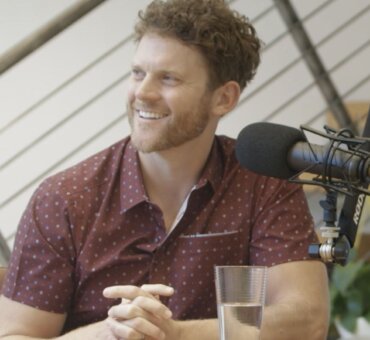

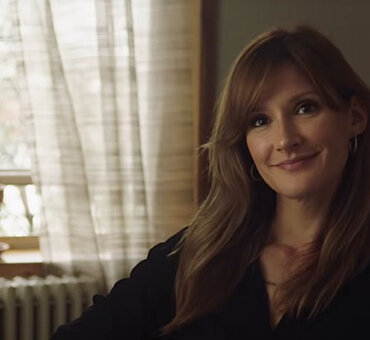
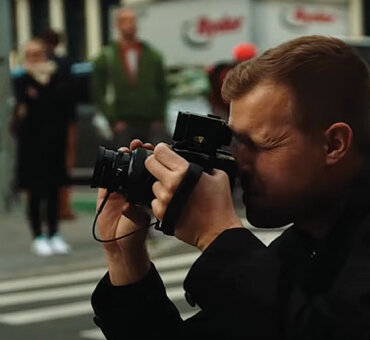
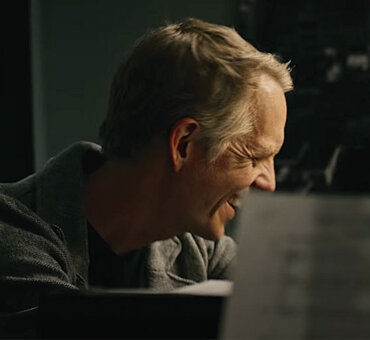


























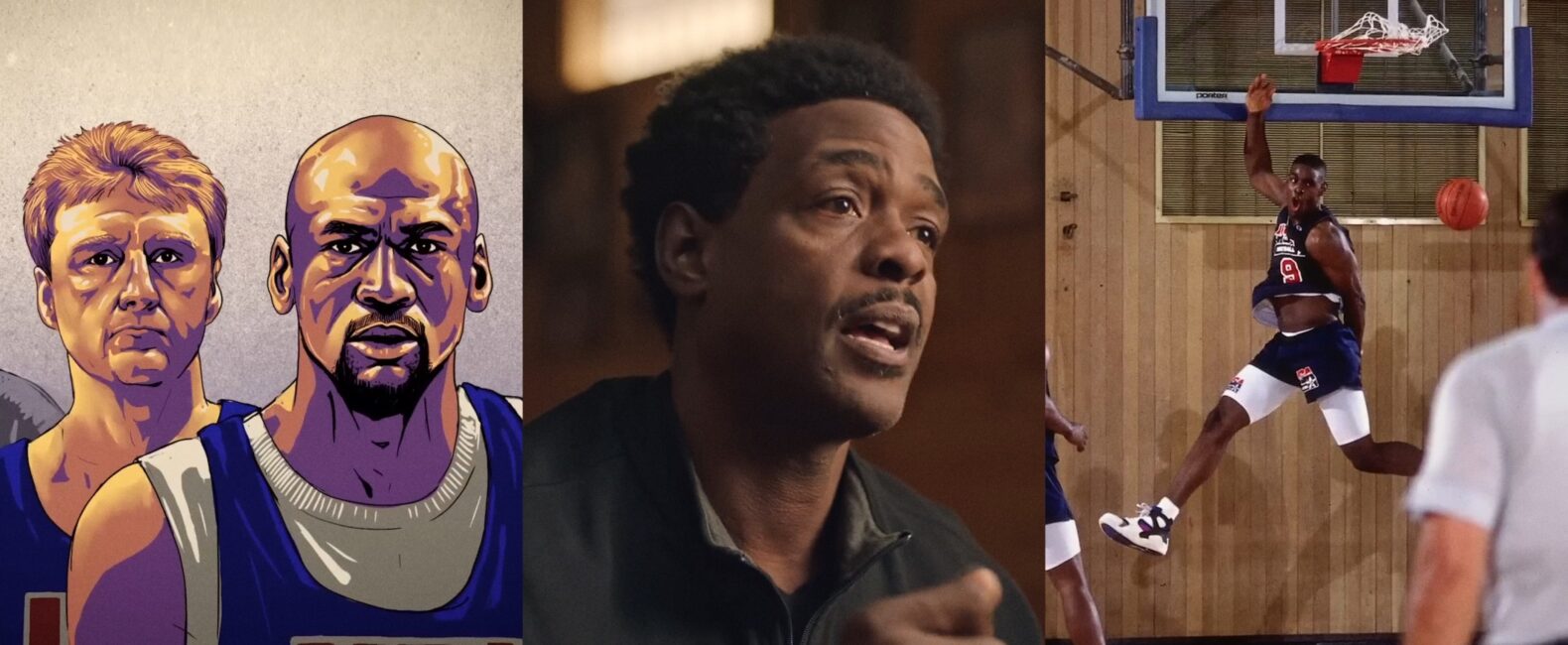
Before the 1992 United States men’s Olympic basketball team became the Dream Team, a group of college players beat them in a closed-door scrimmage.
That unlikely victory (and the debate over the victory’s legitimacy) drives We Beat the Dream Team, an Emmy-nominated docu-short from the creative team at Blue Ox.
And for the Blue Ox editors, the creative direction was simple:
“Our north star in editing the film was ‘make it fun,’” the editor said.
That meant using music as a guide across the spectrum of emotions this story elicited: comedy, suspense, heartbreak, and triumph. It all had to weave seamlessly from one scene to the next without losing any momentum.
Finding the Film’s Tone
Early in the edit, the team decided to embrace the story’s tonal shifts rather than smooth them out.
“At times the story could be triumphant, silly, and heartbreaking,” the editor said. “I found that drawing from epic classical and opera pieces could always deliver what we needed.”
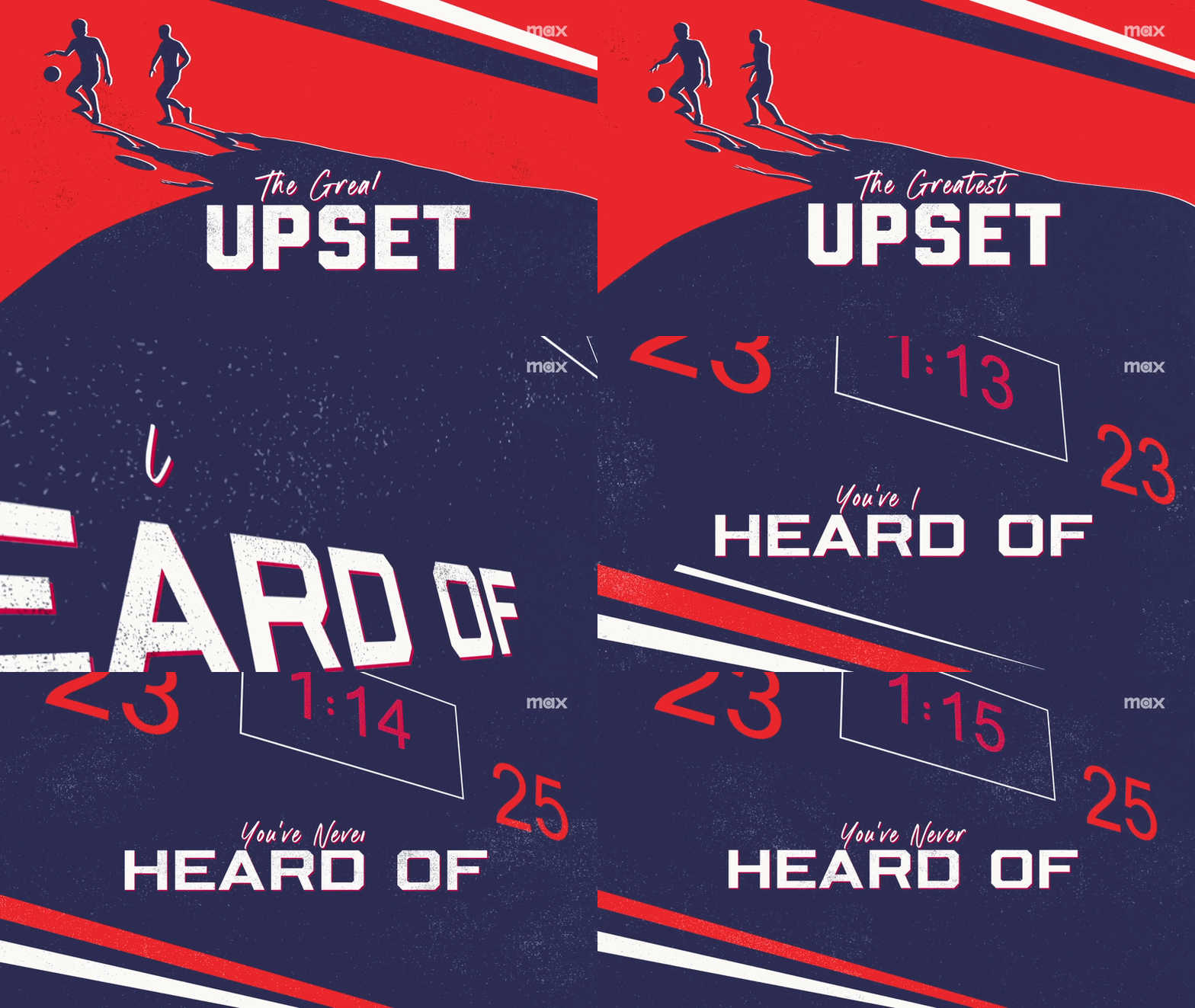
Against the basketball footage, those larger-than-life arrangements added scale … and a little self-aware humor.
“Pairing these monster arrangements with our basketball scenes added a layer of tongue-in-cheek pretentiousness that was quite enjoyable.”
The editors found the music through their own searches, building the soundtrack around the emotional needs of each scene.
RELATED READS: “Believers: Boston Red Sox” Proves Great Sports Stories Need Great Music
Giving the Underdogs Their Theme
One of the earliest decisions was to license Bill Conti’s “Going the Distance,” the iconic theme from Rocky.
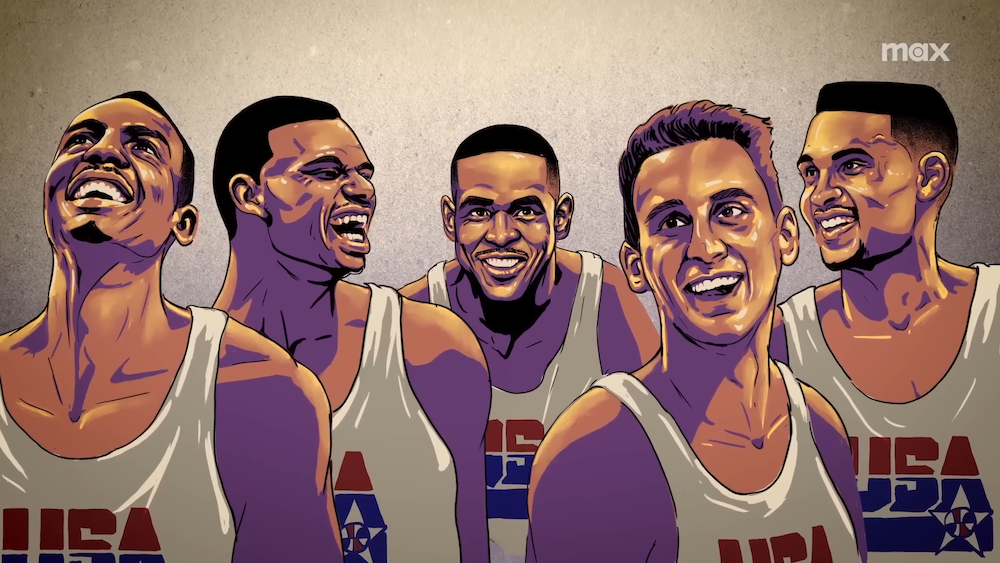
The song plays through most of the scrimmage, framing the college players as underdogs stepping onto the court against Michael Jordan, Magic Johnson, Larry Bird, and the rest of the Dream Team.
“These guys weren’t boxers, but they were underdogs,” the editor said. “So that song helped sell our ‘David vs. Goliath’ narrative.”
The choice gave the sequence an immediate emotional foundation. Before the film fully explains the significance of the upset, the audience already understands how it should feel.
But the scene needed to do more than celebrate the win.
Letting the Victory Sink In
As the scrimmage moves toward its conclusion, the film shifts from action to analysis. The audience begins to understand what went wrong for the Dream Team, what went right for the college players, and just how improbable the result was.
That transition is where Musicbed entered the edit.
“‘Going the Distance’ gave us a real emotional anchor for the scene, but we needed to land it with the intellectual realization that these college kids had bested the likes of Jordan, Magic, and Bird.”
The team searched Musicbed for something that could hold two ideas at once: the urgency of the clock counting down and the weight of what had just happened.
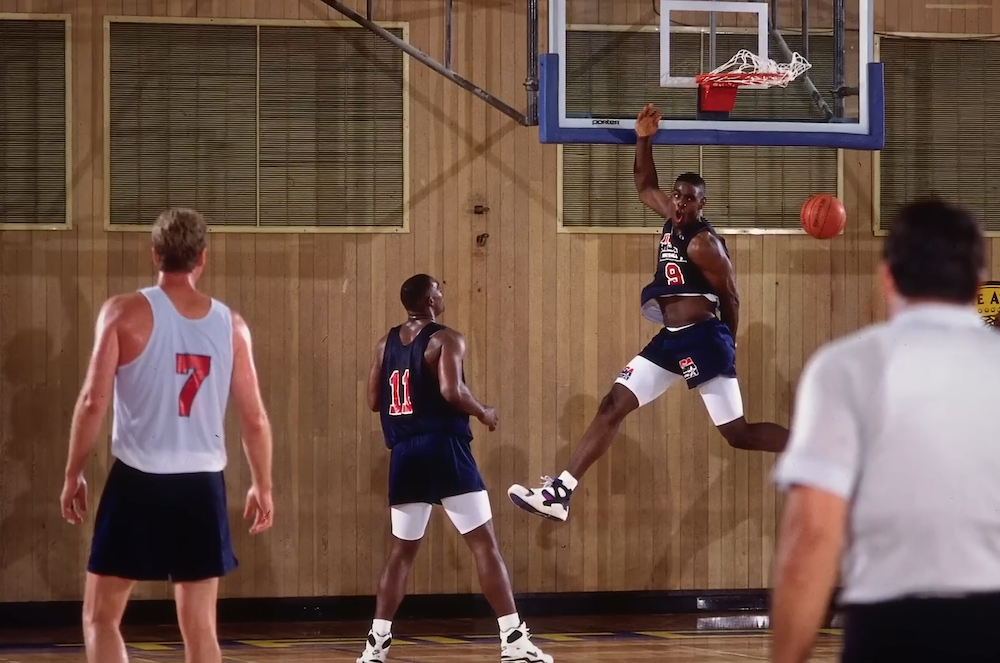
Dexter Britain’s “Royalty” gave them both.
“We looked to Musicbed’s library for something that would convey both thoughtfulness and urgency,” the editor said. “‘Royalty’ perfectly fit that bill.”
The shift in music changes the audience’s relationship to the scene. What begins as an underdog sports story becomes a moment of reflection: These college players did not simply keep up with the Dream Team. They beat them.
RELATED READS: Behind the Score: The Emotional Sound of HBO’s USMNT Docuseries, “U.S. Against the World”
Treating the Story Like True Crime
The film’s central question is not whether the scrimmage happened. It is whether the Dream Team’s coach intentionally sabotaged it to humble his players.
“The major question of the film is, ‘Did the Dream Team coach sabotage the scrimmage so the pros would be humbled?’” the editor said.
That question shaped the structure of the film.
“We structured the story like a true-crime doc, essentially pitting the college players against the coach who said the game was thrown.”
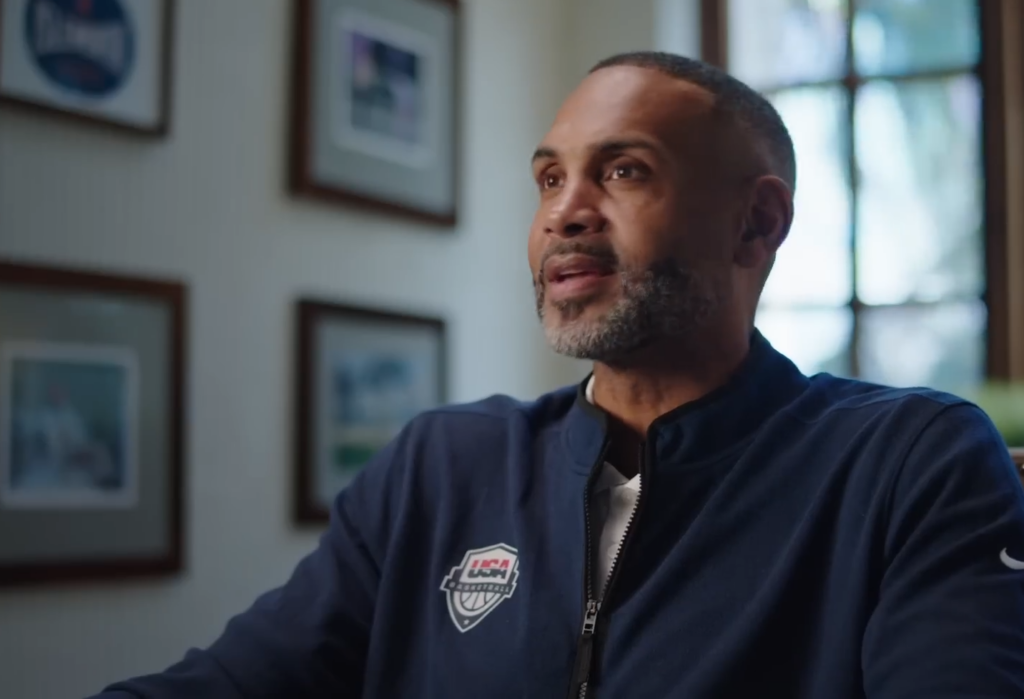
The filmmakers held their strongest evidence until the end: interviews with members of the Dream Team itself.
“Our secret weapon was interviews with the actual Dream Team, which we kept in our back pocket until the end.”
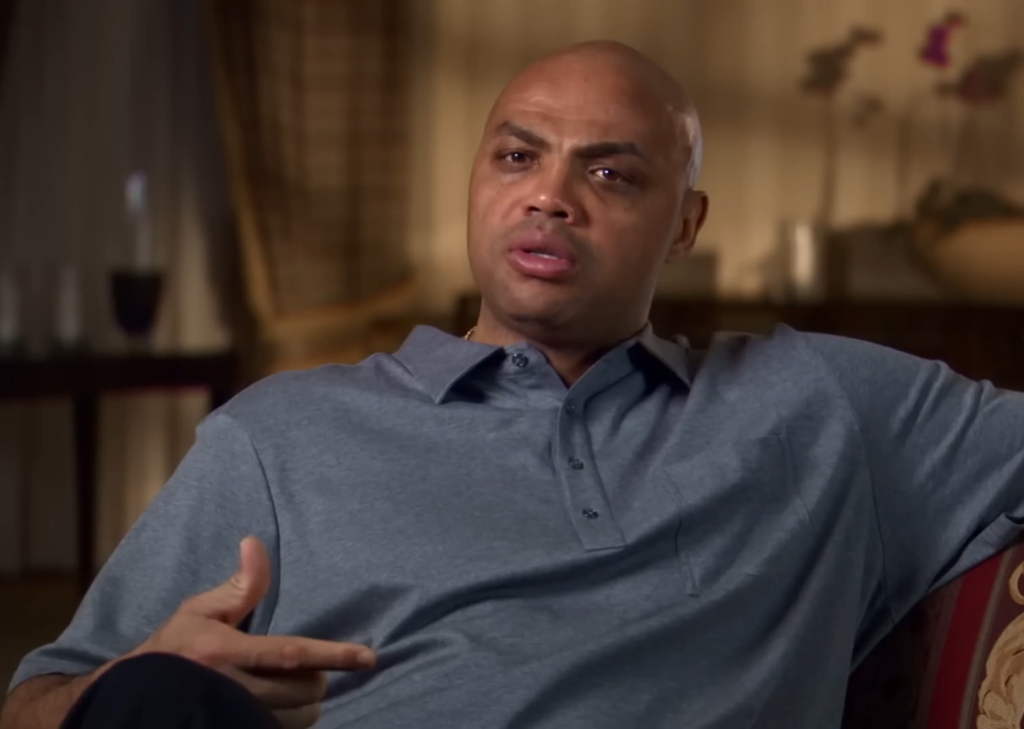
Because the film had spent so much time building tension around their perspective, the editors wanted their arrival to feel significant, but still playful.
Director Mike Tolajian had long wanted to use Rossini’s “The Barber of Seville Overture.” The team found a recording on Musicbed and placed it beneath the Dream Team’s entrance.
“We dropped it into the scene, and it gave us exactly the quirky subtext we needed,” the editor said.
Then the players settle the mystery themselves: The college kids really did win.
Music as a tool for discovery
The music in We Beat the Dream Team never serves just one purpose.
It establishes the college players as underdogs, turns a basketball game into a mystery, creates room for analysis, and introduces some of the most famous athletes in history with a sense of humor.
Each song helped the editors guide the audience toward a different emotional realization.
That is what makes the story feel so human. The music brings viewers closer to the pride, disbelief, humor, and uncertainty inside it.
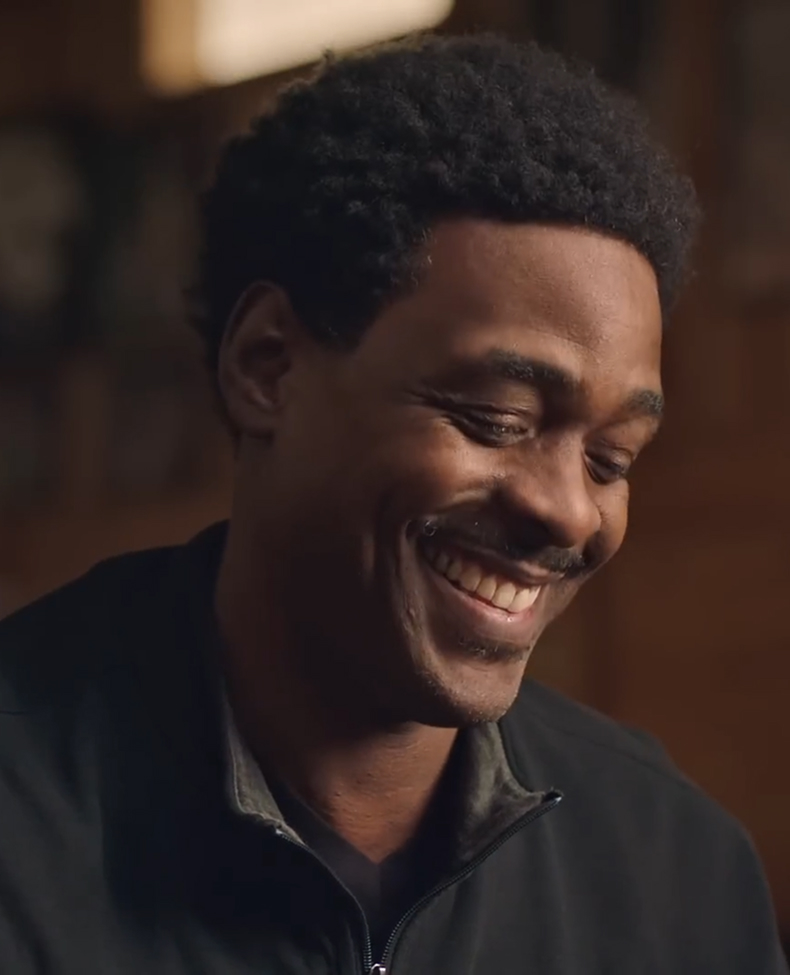
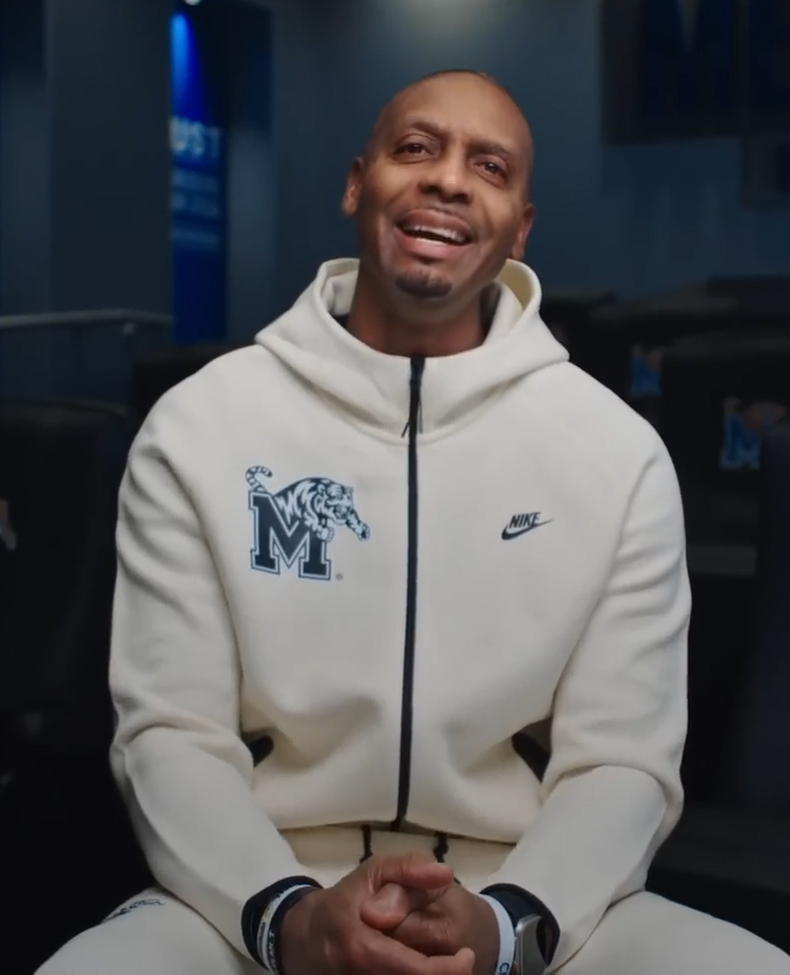
In We Beat the Dream Team, the music didn’t sit underneath the edit. It was a source of inspiration that helped the filmmakers convey the story as it was meant to be told.
RELATED READS: Case Study: “Bo Jackson, Royals Hall of Famer” Wins Musicbed Award
License Music from the Gameday Playlist