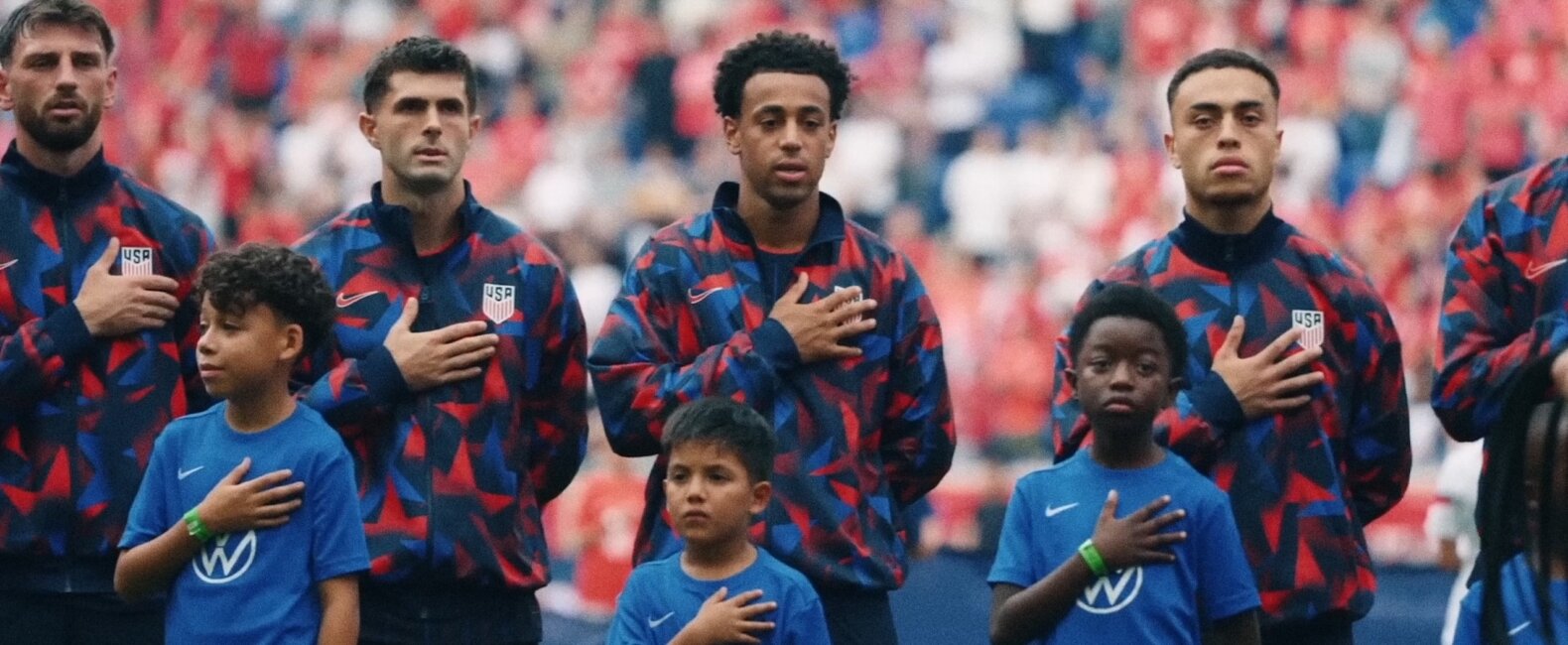
A story as expansive as the USMNT’s 2026 World Cup campaign could never be shaped by wins and losses alone.
Following the U.S. Men’s National Team across four years of change, pressure, and personal sacrifice, HBO’s U.S. Against the World captures a team in motion, not only through major matches and international tournaments, but through the quieter moments that reveal what it means to represent a country at the highest level.
For the editorial team behind the series, that meant entering the project early and helping define the emotional shape of the story from the ground up. With years of footage to organize, evolving storylines to track, and a global visual language to build, the edit became a process of discovery.
We spoke with Lucas Harger, the Emmy Award-winning supervising editor at Bruton Stroube, about shaping a documentary while the story was still unfolding, finding the human thread inside four years of footage, and how Filmsupply helped establish the world around the USMNT’s journey.
FILMSUPPLY: Talk to us about how and when this project got started.
Lucas Harger: We came onto U.S. Against the World incredibly early, before the series even had a home at HBO. I’ve been collaborating with Rand and Jeanina at Park Stories for nearly a decade, so the project really began with a foundation of trust built through years of creative partnership.
RELATED READS: How Filmsupply Gave HBO Max’s “On the Roam” a Gritty, Cinematic Texture
At that stage, the series was still taking shape, which meant our role extended far beyond editing. We were helping define the project’s identity.
We cut early sizzles, helped shape how the series was pitched, and worked closely with the filmmakers to discover what kind of emotional experience the show wanted to be.
From the beginning, the goal was to create something that transcended the conventions of a traditional sports documentary. We wanted something that connected with audiences on a deeper human level.
FILMSUPPLY: What was the biggest creative challenge in telling a story that was still unfolding?
Lucas Harger: The biggest challenge came down to the scope and duration of the project. U.S. Against the World was shot over multiple years. That meant working through a huge volume of footage, with storylines that were constantly evolving and emotional arcs that were always shifting.
-2.gif)
FILMSUPPLY: You’ve got four years’ worth of footage. What did your editorial process look like when organizing such a large amount of footage?
Lucas Harger: The scale of the footage meant that organization was just as important as the edit itself.
With a project spanning multiple years, the editorial process started with building a clear structure for managing a constantly expanding archive of material. The priority was making sure everything could be easily navigated and revisited as new storylines emerged over time.
RELATED READS: How to Create a Mess-Free Timeline and Streamline Footage Logging
From there, the work became about continuously tracking evolving narratives across different periods of production. We followed the key emotional arcs that connected the footage across such a long timeline.
Rather than treating it as a linear process, it required staying flexible and consistently reassessing how different moments and characters were developing as the series progressed.
FILMSUPPLY: What’s different about the USMNT’s story, struggles, and triumphs that you don’t see in other sports documentaries?
Lucas Harger: What makes U.S. Against the World unique is the scope and timeline of the story we’re telling. Because the series follows the USMNT over multiple years, it captures not just major matches and tournaments, but the evolution of the team over time.
RELATED READS: Docu-Style Filmmaking: The Emotional Resonance of this Re-Emerging Film Style
That long-form access allows the audience to see the changing dynamics, emotional arcs, and development of both the team and individual players in a much more expansive way. The series is very character-driven.

While it covers the scale and intensity of international soccer, it’s equally focused on relationships, pressure, identity, and the personal side of operating at the highest level. So you also see these guys’ families evolve and grow.
At the end of the day, it’s an intimate portrait of what it means to represent your country. It’s an examination of the sacrifices of the players and their families.
FILMSUPPLY: From an editing standpoint, tell us about a sequence you’re especially proud of.
Lucas Harger: Across five hours of finished episodes, it’s honestly difficult to single out one favorite sequence — there are multiple scenes in each episode that stand out.
That said, what feels most exciting is the way the series is bookended. I think we really nailed the structure of the series, including how the title sequence comes together by the end of episode five.
It’s hard to describe too much without giving things away. But the opening five minutes of the series and the final five minutes work as a strong, cohesive bookend. That’s probably what stands out most for me.
FILMSUPPLY: Where did Filmsupply footage become most useful in shaping the visual language of the series?
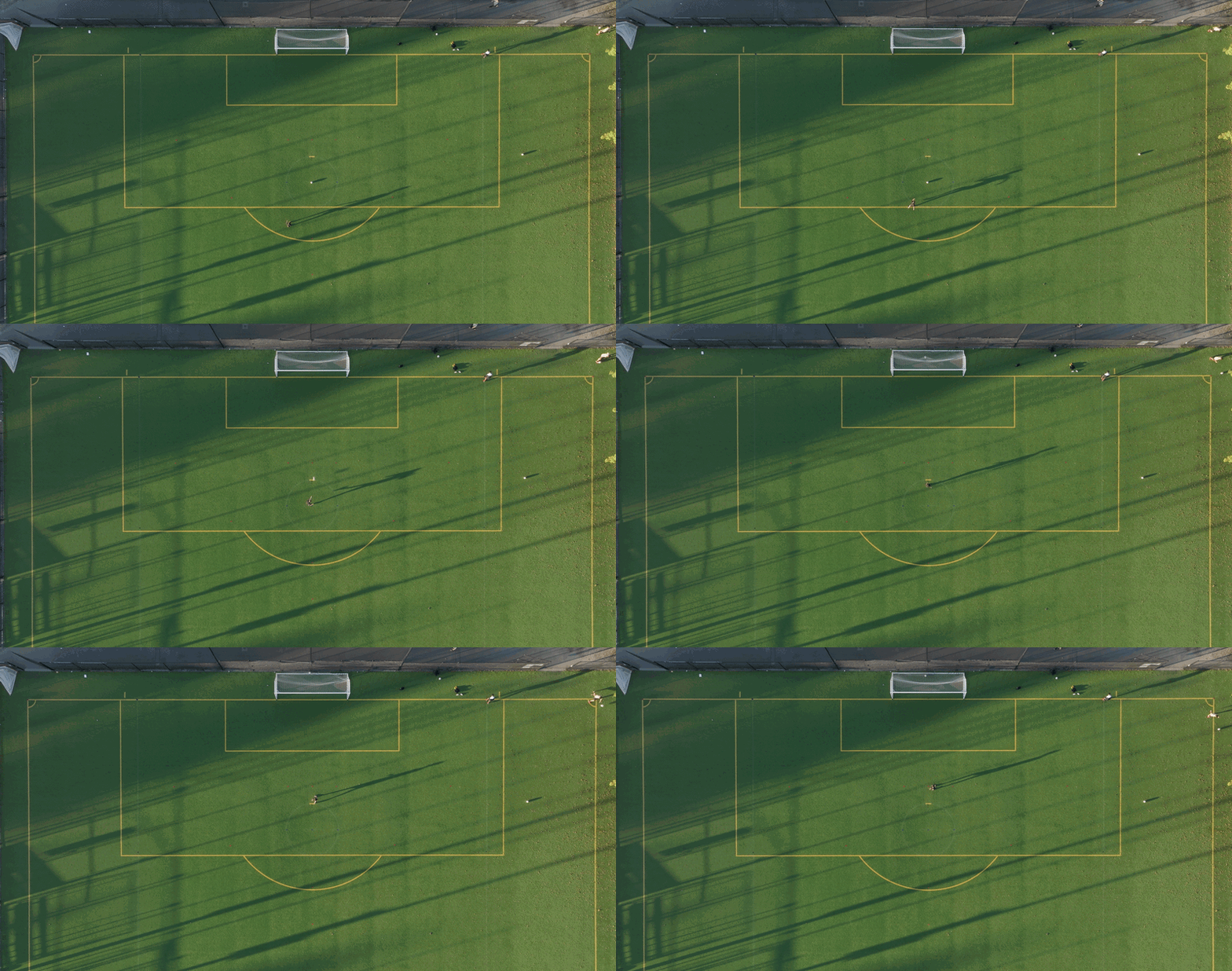
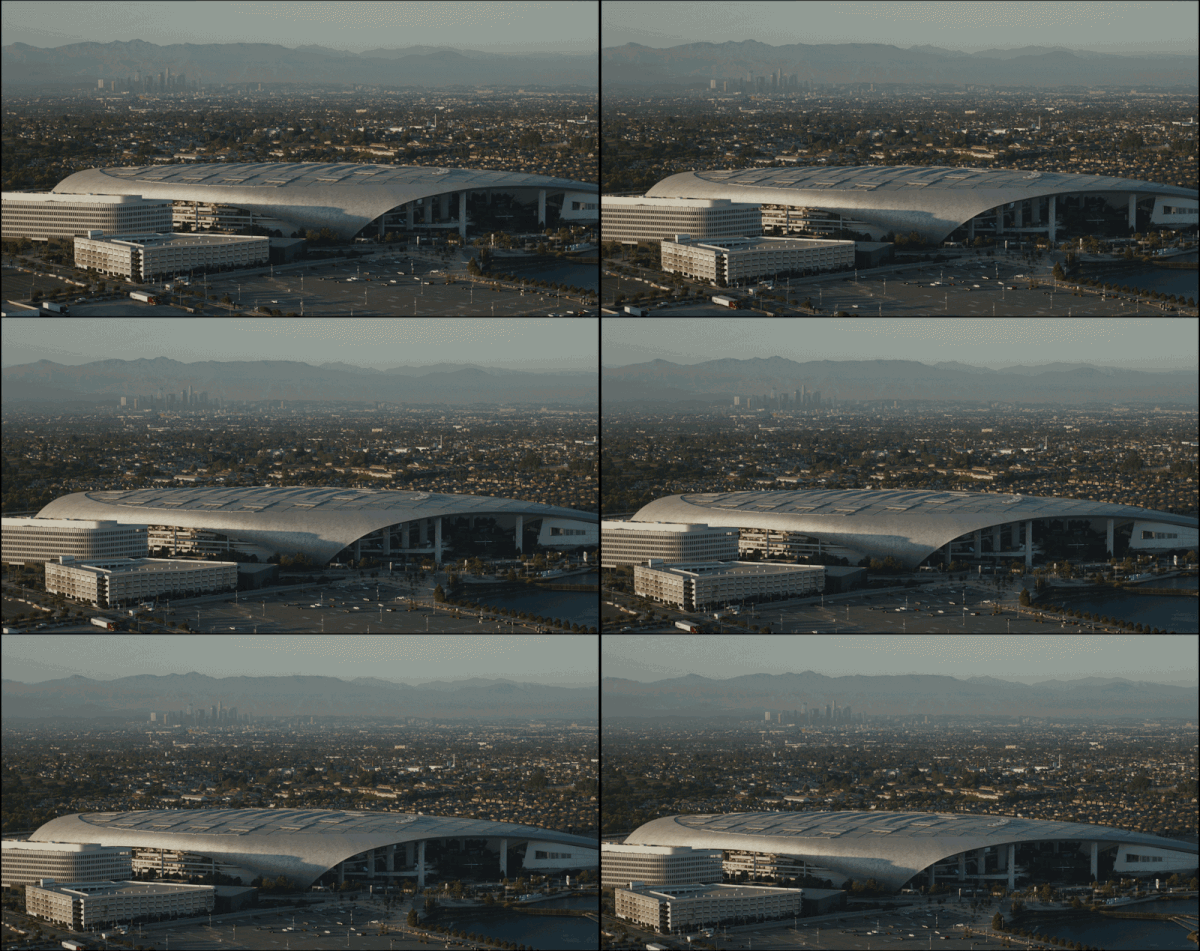
Lucas Harger: This series spans the world. The locations play an important role. We really relied on Filmsupply to help us establish these locations.

-2.gif)
Leaning on Filmsupply vast and globally shot collection was a huge benefit in the edit.
RELATED READS: Capturing the Wild of Yosemite: How Filmsupply Helped Bring Netflix’s “Untamed” to Life
FILMSUPPLY: When viewers finish the series, what do you hope they understand about this team that they may not have seen before?
Lucas Harger: The hope is that viewers come away with a deeper understanding of the team beyond results or headlines. Spending this much time with the USMNT over multiple years reveals the layers behind the public-facing version of elite sport. It shows the consistency, pressure, and long-term development that isn’t always visible in shorter formats.
Ideally, it gives a sense of the human side of the players and the ongoing nature of building something at this level over time.